Solar installations in Southern California are exposed to intense sun, coastal salt air, and wide daily temperature swings. Over time, even a well-installed system develops faults that are completely invisible to the naked eye — cell-level hotspots, delamination, bypass diode failures, and soiling patterns that quietly drain output month after month. A thermal drone inspection finds these defects in a single flight, giving installers, O&M teams, and system owners a clear picture of exactly what's wrong and where.
Why Solar Panels Fail Silently
Photovoltaic panels are designed to last 25–30 years, but degradation is rarely uniform. Individual cells within a panel can develop micro-cracks from shipping, installation stress, or thermal cycling. Bypass diodes — the small components that prevent a shaded or failed cell from dragging down the entire string — can fail open or short, causing localized overheating. Soiling from bird droppings, dust, or pollen creates partial shading that generates heat rather than electricity.
The problem is that none of these faults produce obvious symptoms. A system with a failing string may still generate 85–90% of its rated output — enough to pass a casual visual inspection, but enough of a shortfall to matter over a 20-year performance period. For a 100 kW commercial system, a 10% output reduction represents thousands of dollars in lost revenue annually.
How Thermal Drone Inspection Works
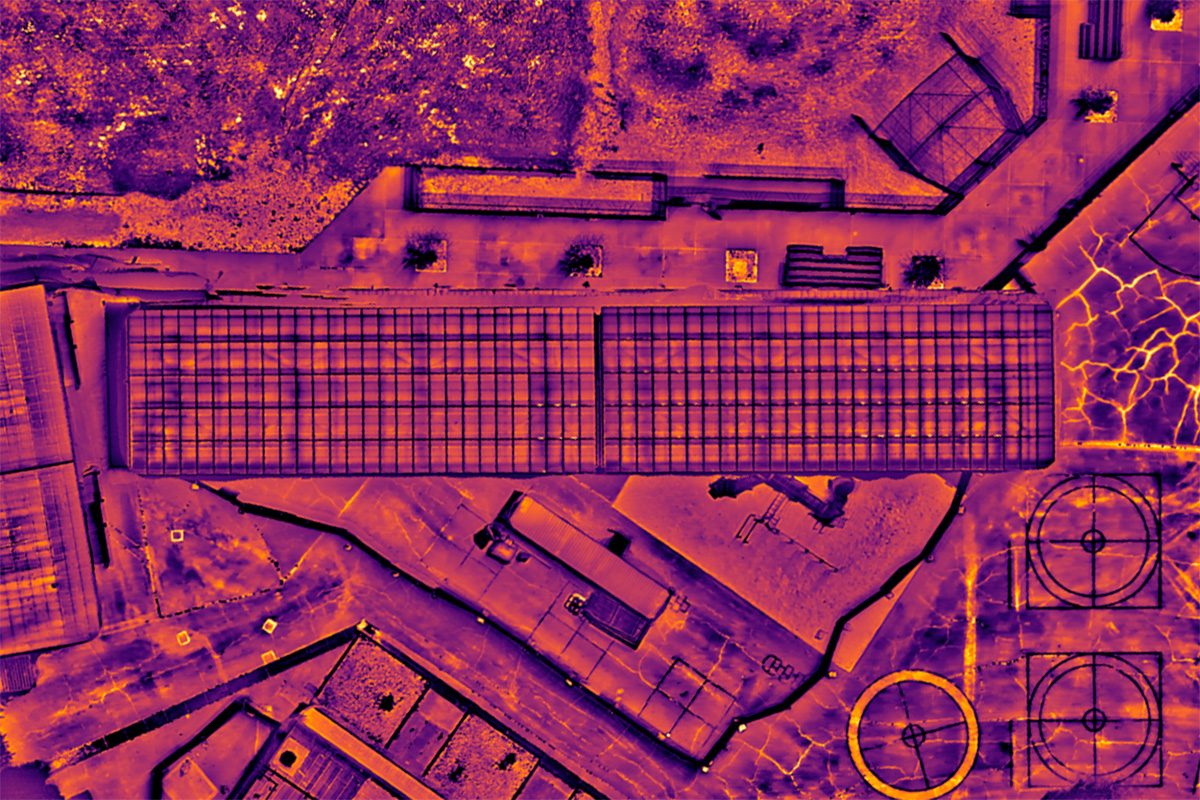
A thermal (infrared) camera detects surface temperature differences measured in fractions of a degree. Healthy solar cells operating under load maintain a relatively uniform temperature across the panel face. Defective cells, failed bypass diodes, and shading anomalies generate excess heat — appearing as bright hotspots on the thermal image.
From a drone, a certified thermographer can document an entire rooftop or ground-mount array in a single flight, capturing both RGB and thermal imagery simultaneously. The drone flies a systematic grid pattern at low altitude, producing a complete thermal map of the array. Processing the data reveals:
- Cell-level hotspots — individual failed or cracked cells showing elevated temperatures of 10–40°C above the panel baseline
- Bypass diode failures — entire cell strings within a panel running hot, typically 20–60°C above ambient
- String-level anomalies — entire strings showing abnormal temperature profiles, often indicating wiring or combiner box issues
- Soiling and shading patterns — areas of localized heating caused by debris accumulation or partial shading from nearby obstructions
- Delamination — moisture ingress between panel layers that shows as irregular thermal patterns across the panel face
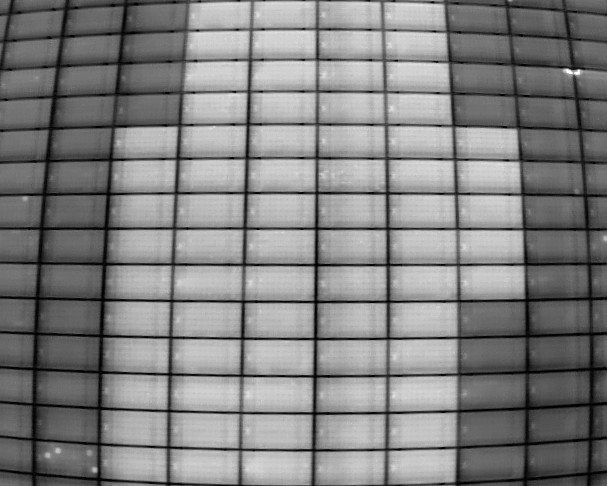
Thermal image captured by Amped Aerial — bright areas indicate elevated cell temperatures consistent with bypass diode stress or partial shading.
IEC 62446-3: The Standard That Matters
Professional thermal PV inspections follow IEC 62446-3, the international standard for infrared thermography of photovoltaic systems. This standard defines inspection conditions (irradiance levels, wind speed limits, time of day), classification criteria for defect severity, and reporting requirements.
Following IEC 62446-3 matters for two practical reasons. First, it ensures the inspection data is defensible — if you're filing a warranty claim or presenting findings to a system owner, a standards-compliant report carries weight. Second, it establishes consistent thresholds for classifying defects:
| Class | Temperature Delta (ΔT) | Severity | Recommended Action |
|---|---|---|---|
| Class 1 | ΔT < 10°C | Minor | Monitor — schedule for next maintenance cycle |
| Class 2 | ΔT 10–40°C | Moderate | Replace within 3–6 months |
| Class 3 | ΔT > 40°C | Critical | Immediate replacement — fire risk |
What Solar Installers Get Out of It
For EPC contractors and solar installers in Southern California, thermal drone inspections serve several distinct business purposes beyond simple fault detection:
Pre-handover commissioning. Running a thermal inspection before system handover confirms that every panel is performing as expected and documents the baseline condition of the array. If a defect surfaces six months later, you have proof it wasn't present at installation — protecting you from warranty disputes.
Warranty claim support. Panel manufacturers require documented evidence of defects to process warranty claims. A thermal inspection report with GPS-tagged imagery, temperature data, and IEC 62446-3 classification is exactly the documentation needed to move a claim forward efficiently.
O&M contract differentiation. Offering annual thermal inspections as part of your operations and maintenance package is a concrete, measurable service that justifies premium pricing. It also gives you a systematic way to catch degrading panels before they become client complaints.
Post-storm damage assessment. After a hail event, high-wind storm, or significant soiling event, a thermal inspection quickly identifies which panels sustained damage and need replacement — without sending a technician onto every roof.
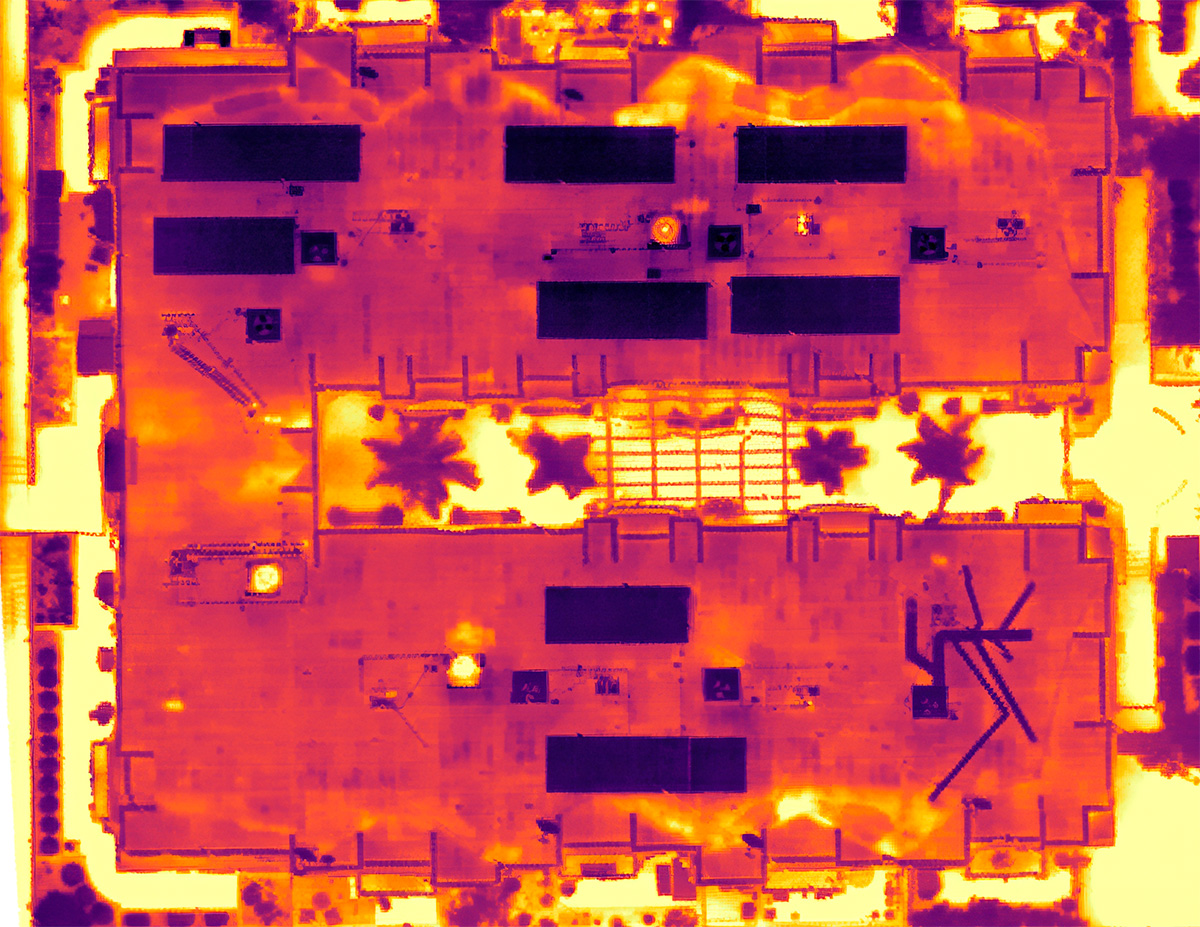
Thermal orthomosaic of a commercial rooftop — orange and white zones indicate heat retention consistent with moisture intrusion or HVAC inefficiency.
Inspection Conditions That Matter
Thermal PV inspections only produce reliable data under the right conditions. IEC 62446-3 specifies a minimum irradiance of 600 W/m² (ideally 700+ W/m²), wind speeds below 4 m/s, and no recent rainfall. In Southern California, the best inspection windows are typically late morning to early afternoon on clear days between April and October — after the marine layer burns off and before afternoon sea breezes pick up.
The system must also be operating under load during the inspection. A system that's been disconnected or is operating in a fault state won't produce the thermal signatures needed to identify defects. Coordinating with the site's monitoring system before the flight ensures the data will be actionable.
What the Deliverables Look Like
A professional thermal drone inspection of a solar array produces a structured report that a non-technical client can understand and act on. Amped Aerial's standard solar inspection deliverables include:
- Full-resolution RGB orthomosaic of the array with panel numbering overlay
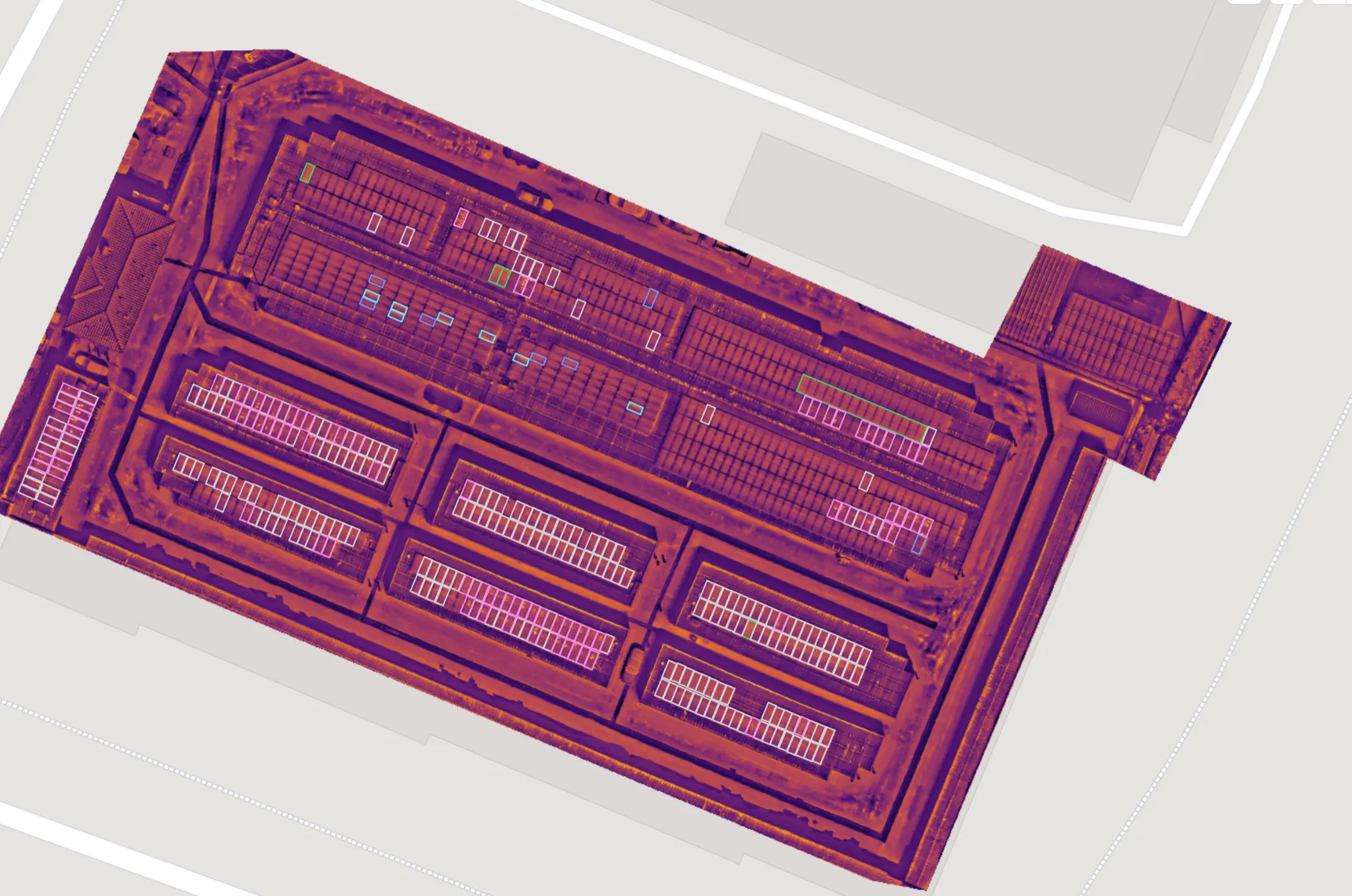
- Thermal orthomosaic showing temperature distribution across the entire array
- Annotated defect map with GPS coordinates for each flagged panel
- Per-panel temperature data table with ΔT values and IEC 62446-3 classification
- Written summary with prioritized replacement recommendations
- Raw thermal imagery (RJPEG format) for client records or further analysis
Reports are delivered as PDF with supporting image files, formatted for submission to panel manufacturers or system owners as appropriate to the project.
How Much Does a Solar Thermal Inspection Cost?
Pricing scales with system size. A typical residential rooftop system (20–40 panels) can be inspected and reported in a half-day engagement. Commercial ground-mount systems of 500 kW to several MW require more flight time and processing but are still far more cost-effective than manual panel-by-panel testing.
The more relevant comparison is against the cost of not inspecting. A single Class 3 defect — a bypass diode failure running 50°C above ambient — is a fire risk. A string of Class 2 hotspots degrading output by 15% on a 200 kW commercial system costs the owner roughly $3,000–5,000 per year in lost production. A thermal inspection that catches and corrects those faults pays for itself in the first year.
Scheduling an Inspection in Southern California
Amped Aerial serves solar installers, EPC contractors, O&M providers, and system owners across Southern and Central California. We're FAA certified, fully insured with commercial liability coverage, and deliver inspection reports formatted for warranty claims and client handover packages.
If you have a system that's underperforming, a post-installation commissioning inspection to schedule, or an O&M contract that needs a thermal component, reach out through the contact form or call (805) 222-7858 to discuss your project.